
Life masks are a unique form of art that captures the exact likeness of a person, preserving their features and expressions in a detailed, three-dimensional form. As an artist deeply interested in themes of identity and societal roles, creating life masks allows you to explore these concepts in a tangible and profound way; they are representations of individual identity. Each mask captures a moment in time. This makes life masks a powerful tool for exploring themes of identity and self-perception.
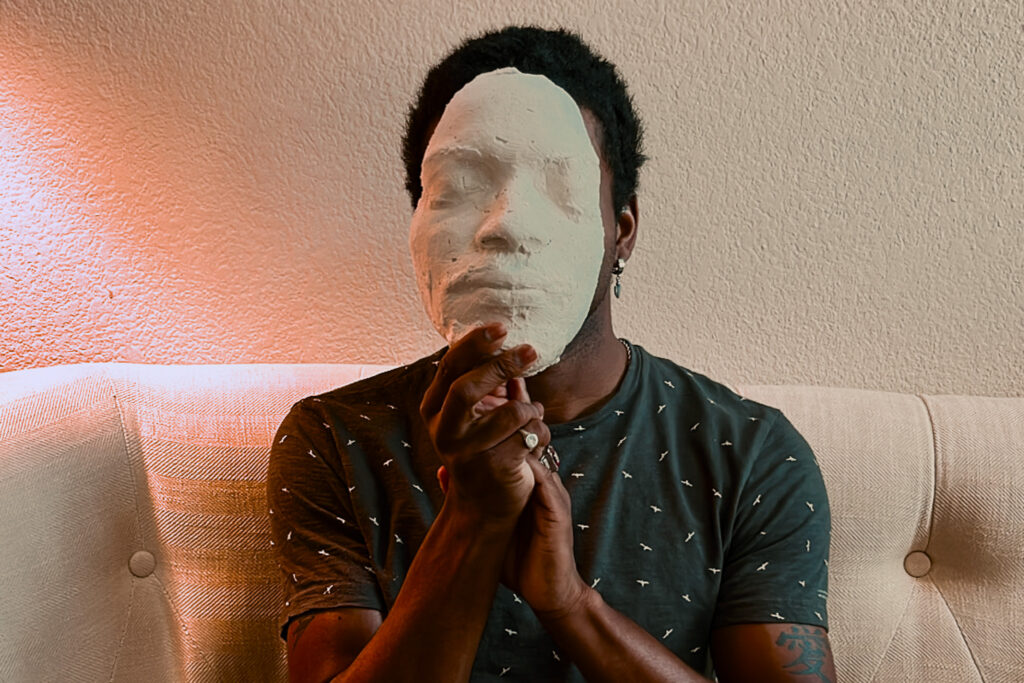
Life masks have a rich history dating back centuries. In ancient Egypt, death masks were used to preserve the likeness of the deceased for the afterlife. During the Renaissance, life masks became popular as a tool to help paint portraits. Since the introduction of the camera, life masks and death masks have fallen into obscurity. However, cameras do not grant the autonomy to freely change perspectives at the will and pleasure of the viewer– as can be done with a tangible cast. This three-dimensionality gives a more holistic and intimate understanding of the subject. The viewer can interact with the mask– moving around it, touching it, and observing it in varying lighting conditions, all of which can reveal different aspects of the person’s likeness.
The reaction of the subject when the mask has been cast is usually surprising, and funnily enough they’ll often say “that does not look like me.” And I’ll usually respond not only does it look like you, it IS you. It is an unmediated representation of a person, free from the subjective interpretation of the subject themselves.
I believe that this separation of subjective and objective qualities elevates the appreciation of the individual’s inner traits, which we often find coated onto the perception of the face– showcased through the self-conscious adjustments people often make when presenting themselves. This not only creates a powerful and intimate connection between the viewer and the subject, but also the subject and the mask itself. This encourages us to look beyond the surface and consider the experiences and emotions that have shaped the faces that people wear.
Through the creation of life masks, we are invited to engage with the authentic and unaltered features of the human face, fostering a greater appreciation for the complexities of identity. This enduring art stands as a testament to the richness and depth of humanity. It shines a bright spotlight on the ever-living question: who am I?