
ABOUT
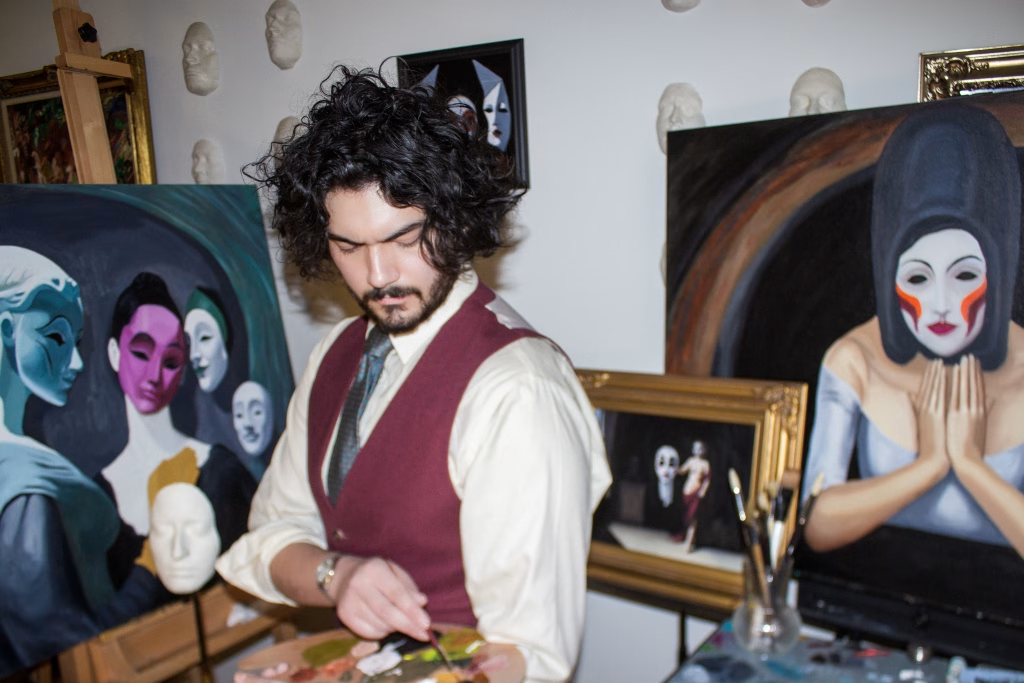
Marcus Delzell (born in 1998) is a multidisciplinary artist whose paintings, sculptures, and theatrical works unravel layers of personhood and the hidden psychological currents shaping human perception.
Beginning his artistic journey through theater, Delzell developed a distinctive visual language rooted in the exploration of masks, both literal and figurative, as symbols of concealment and revelation. His provocative imagery invites viewers into an introspective dialogue about the veils we wear and the psychological forces which underly human interaction.
At the heart of Delzell’s practice is the Metaplanetic Observation Method, an original conceptual framework that blends spontaneous cognitive exploration (plané, Greek for “wandering”) with deliberate observation. This harmony between abstraction and intentionality mirrors Delzell’s artistic role as both conjurer and analyst, creating artworks that balance spontaneity with clarity.
Delzell’s work draws heavily from Surrealist traditions, particularly in his fascination with symbolism and ambiguity. His recent paintings often depict enigmatic figures and dream-like scenarios, merging classical visual motifs with contemporary philosophical themes.
Based in Austin, Texas, Delzell’s growing body of work continues to garner recognition for its sophisticated fusion of contemporary art, theater, and philosophy, presenting an examination of the ever-shifting boundaries between the conscious and unconscious mind.
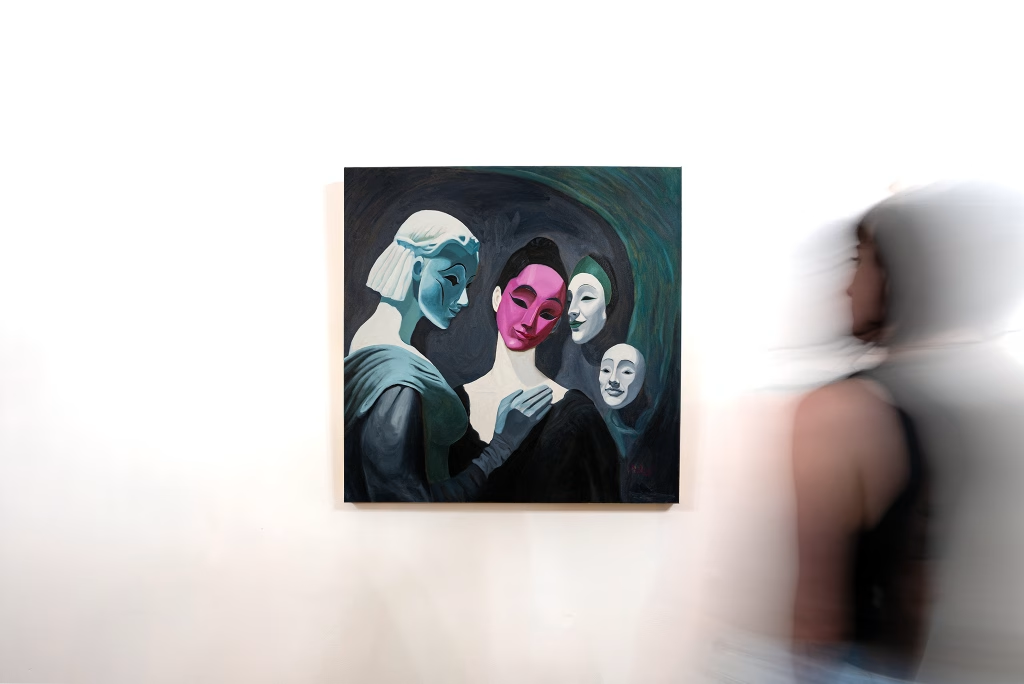
My work as a multidisciplinary artist is an ongoing investigation into identity, perception, and the roles inhabited within societal constructs. Through painting and stage plays, I examine the intricacies of the human psyche to offer new perspectives on how meaning is formed and internalized.
My practice creates spaces of quiet confrontation, where viewers are invited to question their self-perception and the narratives imposed on themselves and others. By engaging with archetypes and the metaphor of the mask, I seek to provoke reflection on the roles assumed in both public and private spheres, and the tension between authenticity and performance.
Latest Posts
- Is the Human Mechanism Apeirochoronic?
 I’ve proposed polychoronic dispersion as an illustration of personhood in a previous post, which you can find here. Individuality is informed by an individual’s polychoronic rotation, which include a multitude of seemingly finite facets. Finite is the distinction that suggests personhood is expressed via a choronic rotation that is not infinite. Paradoxically, I do not… Read more: Is the Human Mechanism Apeirochoronic?
 - Polychoronic Dispersion and the Persistence of Self
 The expression of personhood is analogous to the rotation of a hyperdimensional polytope. The “self” is not linear or ontologically static, but rather expressed in a multidimensional geometry that is fleetingly revealed in fragments.
 - Supergolden Craniofacial AnthropometryIn our contemporary society, when you hear of an individual experiencing an emotional response to art, the typical first expectations of the medium are that of music, film, prose, poetry, and sometimes visual art (among others). Media which are bound by the very nature of their respective definitions to be experienced utilizing a temporal element will induce emotional resonance more frequently than those that do not.